

I am incredibly grateful for the opportunity to speak with so many talented professionals every single day.
From Associate Directors in global organisations to dedicated public sector workers seeking a new path, the individuals I speak to are plugged in, resilient, and actively navigating a market that has shifted beneath their feet.
It is a privilege to hear your stories, share in your frustrations, and ultimately, help you map a way forward.
However, after speaking with over 100 people so far in 2026, clear patterns have emerged. The market isn’t just “tough”; it has changed fundamentally. Based on real conversations with real people, here is a trend analysis of the top 15 themes keeping candidates awake at night, and my recommendations on how to overcome them.
1. The “Ghosting” Epidemic and Vague Feedback A prevalent issue is candidates reaching final interview stages only to be met with silence or generic rejections claiming another candidate was a “better match.” Many are finding that recruiters simply disappear after initial screenings.
My Recommendation: Do not rely on employers for closure. While you should always chase for feedback two weeks after a role closes, you must accept that vague feedback is often a cover for a “gut feeling” decision. Focus on controlling your own performance by recording your answers and self-critiquing, rather than spiralling over feedback you may never receive.
2. The ATS Brick Wall There is a growing trend of candidates submitting hundreds of applications with zero response. Highly qualified professionals are finding themselves ignored because they are not navigating Applicant Tracking Systems (ATS) effectively.
My Recommendation: Stop writing your CV as a career history and start writing it as a job application. You must tailor your CV for every single role. If the job description asks for “stakeholder management” and you have “client liaison,” change it. You must speak the language of the algorithm to get in front of the human.
3. Blocked by Internal Politics and Stagnation For those who have been with a company for a long time, there is a growing frustration with a lack of internal progression. Many professionals are performing at a higher level but find themselves blocked by unsupportive management or opaque promotion structures.
My Recommendation: Recognise when it is time to look externally. While it is always worth having a conversation with your manager about your career aspirations, do not wait indefinitely for a change that may never come. Use that frustration as fuel to actively seek out new opportunities where your growth is a priority.
4. The “Overqualified” Trap Senior professionals willing to take a step down for better work-life balance or a change of pace are being rejected. Employers frequently fear these candidates are a “flight risk” who will leave as soon as a higher-paying role appears.
My Recommendation: You must address the “flight risk” elephant in the room immediately. Do not just say you are happy to take a step back; explain why authentically. Frame it as a desire to move away from corporate stress to have a direct impact in a smaller organisation, or a desire to leave the instability of contracting for a permanent home.
5. The Difficulty of the Career Pivot Moving from one sector to another is harder than ever as companies tighten belts and demand exact experience. Professionals from sectors like education or retail are finding it daunting to translate their skills into corporate or risk roles.
My Recommendation: Stop relying on job titles and start selling transferable skills. A teacher isn’t just a teacher; they are a leader of people, a manager of budgets, and a strategic planner. You must front-load your CV with these competencies so the recruiter sees the skill before they see the industry.
6. Interview Rust after Long Tenure Many clients haven’t interviewed in over a decade, having relied on internal promotions or referrals. This leads to freezing up, rambling, or going blank due to nerves when faced with modern competency-based questions.
My Recommendation: You cannot “wing” an interview in 2026. You must treat it like a project. Prepare 10 strong career stories using the STAR framework (Situation, Task, Action, Result) and map them to potential questions. Record yourself speaking them out loud. Watching it back is the “Eureka moment” that fixes bad habits.
7. The “Scattergun” Approach There is a tendency to panic-apply to a wide variety of roles, from Operations Director to Customer Experience, hoping something sticks. This inevitably leads to immediate rejection and demoralisation.
My Recommendation: Slow down. Applying for 40 jobs a day via “Easy Apply” is a waste of time. Focus on roles where you are at least a 70% match. Quality over quantity will always win the work; a tailored application for the right role is worth ten generic clicks.
8. Visa Sponsorship Roadblocks Talented international candidates are hitting a wall where their skills are secondary to their immigration status. Even candidates with niche skills are finding that a lack of immediate right-to-work is a blocker.
My Recommendation: You must be a superstar candidate to justify sponsorship. Do not apply for roles where you are a “maybe.” Target niche roles where your skills are in short supply, and state clearly on your application if you are willing to relocate to remove location barriers.
9. The LinkedIn “Easy Apply” Trap Many candidates have noticed that applications sent via LinkedIn’s “Easy Apply” button rarely receive responses. This feature often floods recruiters with low-intent applications, causing them to deprioritise that inbox.
My Recommendation: Never use “Easy Apply”. Recruiters often ignore this pool. If you see a job on LinkedIn, go to the company website and apply directly. It shows intent and ensures your CV actually enters their system.
10. The “Generalist” Curse Candidates with broad experience across multiple functions are struggling to define their value. A CV that tries to be everything to everyone often ends up appealing to no one.
My Recommendation: Be ruthless with your editing. Your CV is not a biography; it is a job application. If you are applying for a Risk role, remove the HR duties. If you are applying for Ops, minimise the Sales. Curate your experience to match the specific problem the employer is hiring you to solve.
11. The Contractor Stigma Former contractors are struggling to convince employers they want a permanent role. Hiring managers often fear they are just parking themselves in a permanent seat until the contract market improves.
My Recommendation: Humanise your decision. Don’t just say you want stability; explain that you miss being part of a culture, you miss seeing the long-term impact of your work, and you are tired of being the outsider. Make them believe you want their job, not just a job.
12. LinkedIn Invisibility Many professionals are “social media averse” and have dormant LinkedIn profiles. This makes them invisible to the hidden job market where recruiters actively search for talent before advertising.
My Recommendation: You do not need to be an influencer, but you must be visible. Optimise your headline with your target job title, not your current one. Recruiters use LinkedIn as a search engine; if you don’t have the keywords, you don’t exist.
13. Failing to “Sell” the Narrative During interviews, candidates often struggle to pitch themselves, delivering a chronological history of their career rather than a compelling elevator pitch that hooks the interviewer.
My Recommendation: Your “Tell Me About Yourself” answer should be two minutes long, max. It is: Who you are (Headline), Your Core Achievements (The Evidence), and Why You Are Here (The Fit). Stop reciting your CV and start telling them why you are the solution to their problem.
14. The “Graduate” Perception for Experienced Juniors Candidates with a few years of solid experience are being treated like fresh graduates because their CVs highlight their education too prominently or fail to showcase technical project ownership.
My Recommendation: If you have experience, bury your education at the bottom of the CV. Front-load your technical projects and individual contributions. Make it impossible for them to mistake you for a beginner by leading with your commercial value.
15. Confidence Crisis and Imposter Syndrome Perhaps the most common theme is a loss of confidence. Whether due to redundancy, health issues, or toxic work environments, many professionals feel like “frauds” despite years of competency.
My Recommendation: You are more than your job title. We often undervalue what comes easily to us. Objective feedback is critical here. Sometimes you need an expert to hold up a mirror and show you that what you think is “just doing your job” is actually a highly valuable, marketable skill.
——————————————————————————-
Ready to Turn the Corner?
If you recognise yourself in many of these themes, then you need a new strategy to help. The market has changed, and the old methods simply do not work.
I am a Career Transition Coach who helps mid-to-senior professionals navigate this complex market. I don’t just write a CV and wish you good luck. I provide an end-to-end service including deep-dive career coaching, ATS-optimised CV writing, and rigorous interview training to ensure you don’t just apply, but you win the work.
Book a chat with me and let’s see about how we can get you unstuck.
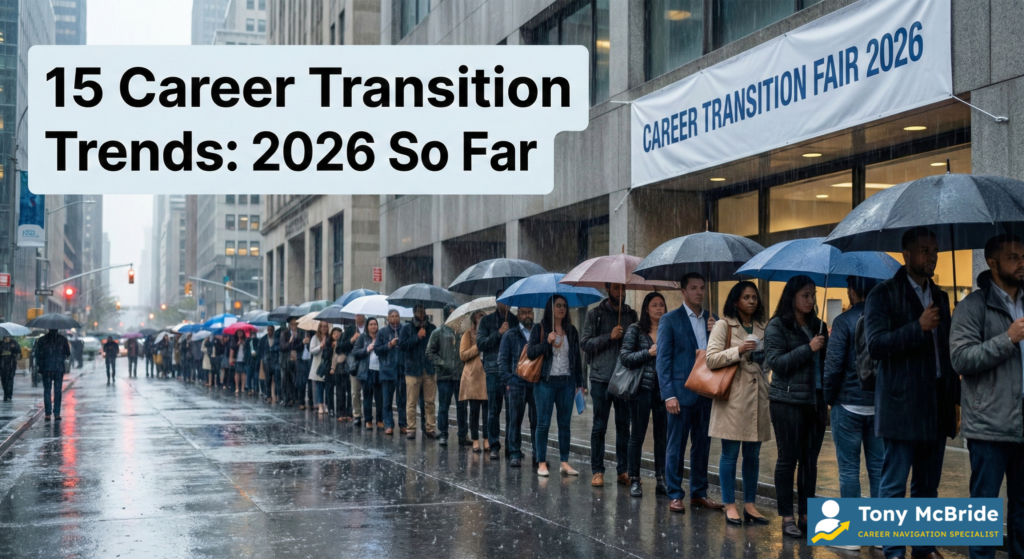
My final thought on 2026 so far : It has been raining for far too long! March has to change…